
I am very happy with this dentist. I moved to this dentist after a bad experience at my old one, which always made me feel comfortable and at ease. I moved out of the area but will still use this dentist and can’t recommend it enough.
Crowns
Bright Dental Surgery, St Johns, Woking
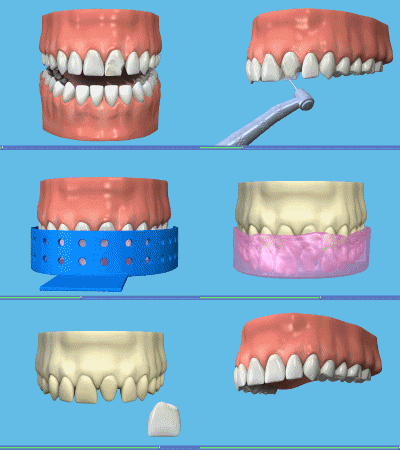
Dental crowns are custom-made caps placed over damaged or weakened teeth to restore their strength, shape, and appearance.
Crowns are placed over damaged or decayed teeth to restore their shape, size, strength, and appearance. Depending on the patient’s needs, crowns made of different materials offer various benefits.
Anterior Crown
An anterior crown is also known as a dental cap. These teeth include the incisors and canines most visible when you smile or talk. Typically designed with aesthetics in mind, they aim to closely match the natural colour and appearance of the surrounding teeth. They are an effective way to restore the function and appearance of front teeth, providing both protection and a natural-looking result.
Features of Anterior Crowns
- They are made from natural materials, such as porcelain, ceramic, or porcelain-fused-to-metal (PFM). These materials can be colour-matched to the adjacent teeth, ensuring a seamless blend.
- Anterior crowns restore the function, shape, and appearance of damaged, decayed, or discoloured front teeth. They can also protect a tooth after a root canal, repair a fractured tooth, or cover a tooth with a large filling when insufficient natural tooth structure is left.
- Since the front teeth are critical for a person’s smile, anterior crowns are made to be as lifelike as possible. This includes mimicking the natural teeth texture and colour gradient.
- While aesthetics are a priority, anterior crowns must also be strong enough to withstand the biting forces of the front teeth. Materials like porcelain and zirconia offer a good balance between strength and appearance.
When Anterior Crowns are Used
- When a front tooth is significantly decayed or broken, a crown can restore its shape, size, and function.
- After a root canal, the tooth may become more brittle, and a crown can protect it from breaking. Crowns can cover discoloured or misshapen teeth, improving the appearance of your smile.
Posterior Crown
A posterior crown is a type of dental crown placed on one of the back teeth, which includes the premolars and molars. These teeth are primarily responsible for grinding and chewing food, so crowns in this area must be solid and durable to withstand the significant forces exerted during eating. While aesthetics are important, especially for premolars, durability is often the primary consideration for these crowns.
Features of Posterior Crowns
- Posterior crowns can often be made from solid and durable materials such as metal (gold or metal alloys), porcelain-fused-to-metal (PFM), or zirconia. While aesthetics are less concerned for posterior crowns than anterior crowns, many people still opt for tooth-coloured materials, especially for premolars, which are partially visible when smiling.
- These crowns restore the function of a damaged, decayed, or broken back tooth. They can also protect a tooth that has undergone root canal treatment or has a large filling.
- Given the significant forces involved in chewing, posterior crowns are designed to be highly durable. Materials like metal and zirconia are preferred for their ability to withstand heavy biting pressure without chipping or breaking.
- While posterior crowns can be made to match the colour of natural teeth, strength is often prioritised over aesthetics. Though not tooth-coloured, metal crowns are durable and long-lasting, making them a common choice for less visible molars.
When Posterior Crowns are Used
- To restore damaged teeth and cover severely decayed, fractured, or weakened by large fillings.
- They are often placed on a molar or premolar after a root canal to protect the tooth from breaking.
- For strengthening and protecting teeth, crowns provide extra strength and protection for teeth, ensuring they can continue to function effectively.